Information for Visitors to St. Rochus Cemetery

Cemetery Opening Hours:

April to September: 7:00 a.m. – 7:00 p.m.

October to March: 8:00 a.m. – 5:00 p.m.

December 6 to January 6: 8:00 a.m. – 4:00 p.m.

General Information:

Area: approx. 1.1 ha

Graves: approx. 3,000

500 Jahre Rochusfriedhof

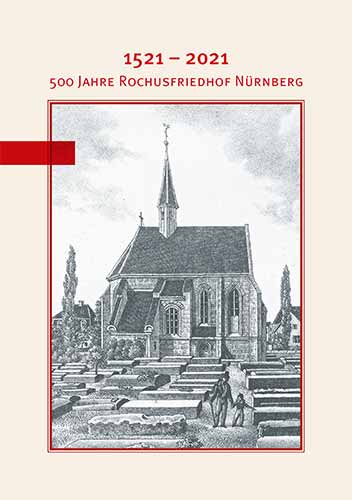
500 Years of St. Rochus Cemetery, Nuremberg

Since 1525, St. Rochus Cemetery has been owned by the Evangelical Lutheran Church and has served for centuries as the burial ground for the Lorenzer side of the city. Despite major social and political changes and the impact of wars, the cemetery has largely retained its original appearance. The characteristic flat gravestones and the bronze epitaphs mounted upon them tell the stories of craftsmen and citizens of Nuremberg who found their final resting place here.

Epitaphs

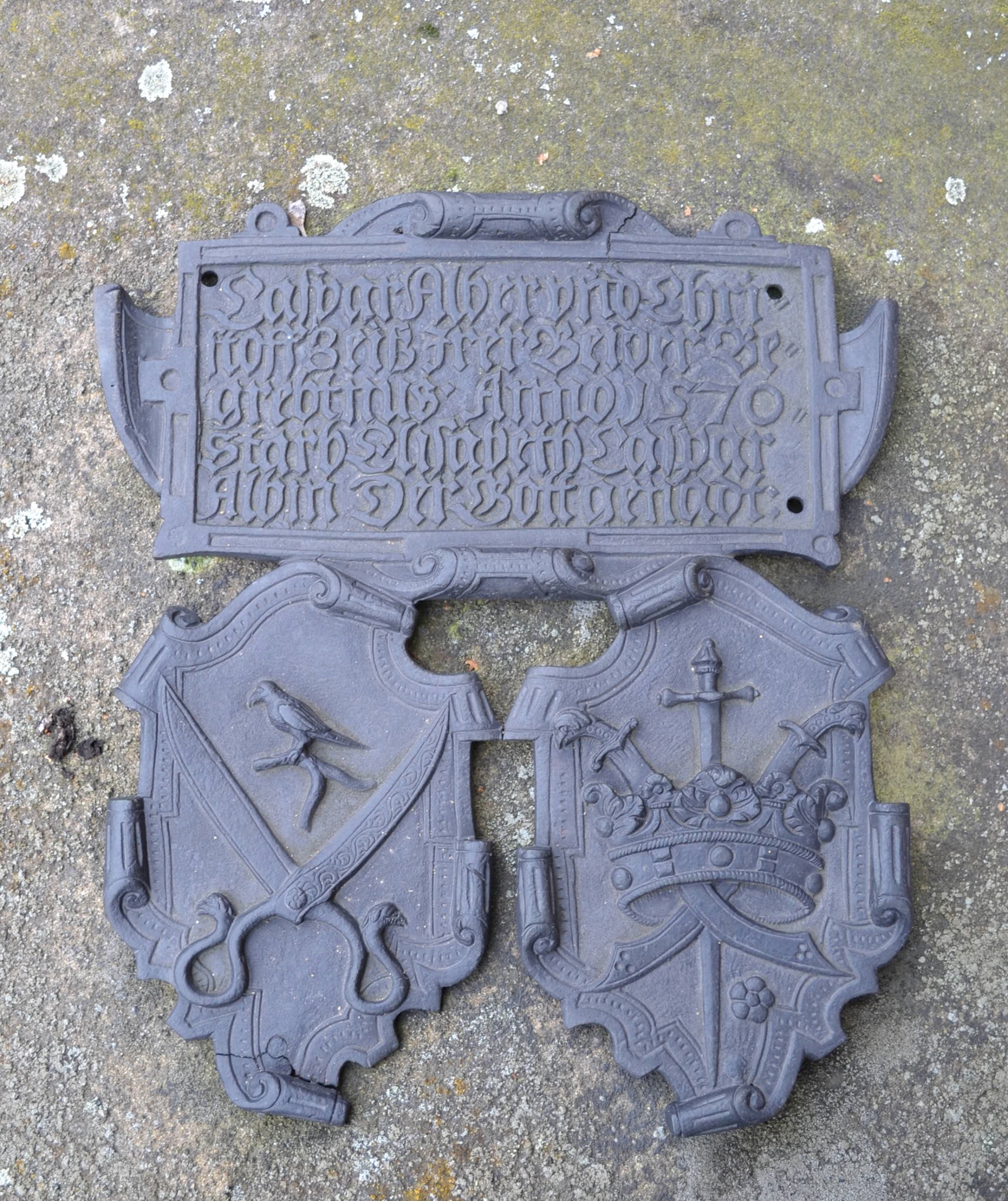
At St. Johannis and St. Rochus Cemeteries, epitaphs are commemorative plaques cast in bronze or brass to honor the deceased. They are created based on individual designs, crafted with artisanal precision, and placed on the flat gravestones.

The Nuremberg City Council believed that all people are equal in death and that earthly wealth should not be displayed. Therefore, as early as 1520, strict regulations were issued regarding the size of gravestones. The epitaph thus became the only way for individuals to distinguish themselves in death. The renowned Nuremberg brass casters fulfilled these wishes in an impressive manner.

At both cemeteries, the artistically and historically valuable epitaphs from five centuries have been preserved. Each era can be recognized by its distinct stylistic features and design elements.

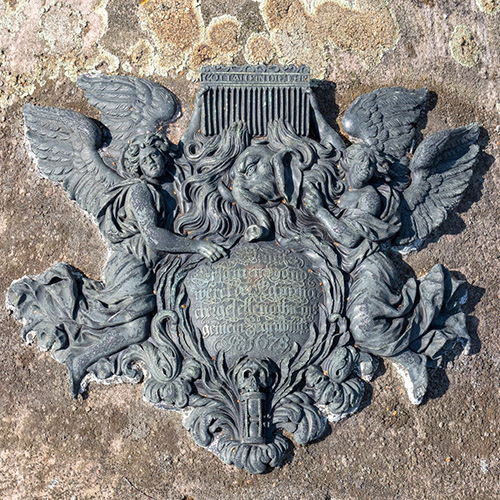
Between the 16th and 19th centuries, epitaphs typically featured inscriptions with personal data, occupation, and sometimes a short biography, along with a coat of arms or master’s mark. Decorations such as ornaments, biblical scenes, tools of the trade, or symbolic representations of the name (“speaking coats of arms”) were often included, sometimes accompanied by depictions of the donor’s family.

In the later 20th century, mass-produced epitaphs became more common, while individuality in memorial design was increasingly emphasized. To preserve the historical heritage while allowing for new creations, a committee continues to oversee and approve epitaph designs — a tradition that has existed for centuries.

Further information can be found at: www.epitaphienkultur.de

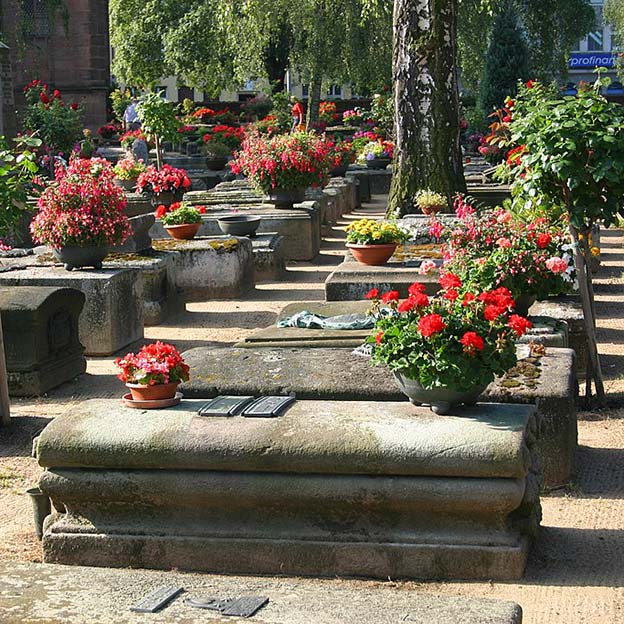
Gräber auf dem Rochus Friedhof

Gravestones

At the beginning of the 16th century, the graves in St. Johannis and St. Rochus Cemeteries were covered with simple, rectangular sandstone slabs. The City Council of Nuremberg at that time determined the stone dimensions to be three by six Werkschuh (approximately 84 x 167 cm). The oldest stones date back to around 1520.

This simple stone design remained unchanged for a long time. It was not until the 17th century that the tops of the stones became more curved, the long sides more rounded, and the surfaces were inscribed with engraved, recessed lettering.

Around 1650, a broad relief band—most often in the shape of a cross—was added to the curved tops of the stones. From this time on, pedestal-like ornaments also began to appear at the head end of the stones, although these remained rather rare.

Around this time, another type of gravestone emerged: the four sides became strongly profiled, and the top was separated by a deep groove, giving it the appearance of a (coffin) lid.

The shape of the stones continued to evolve, taking on the form of a sarcophagus: the top became curved, the long sides concave with rich profiling. The narrow sides were rolled into volutes, later featuring cartouches in the center. This type of stone remained predominant until the 18th century.

During the Early Classicism period, the coffin-shaped form of the gravestone remained, but from this time onward, the four sides were more frequently adorned with garlands. In the second half of the 19th century, flat gabled tops appeared on the stone covers, and a relief cross was added to the narrow sides.

Each stone has borne its own engraved number since the late 16th century.

Kammacher Epithaph Rochus Friedhof

Famous Burials at St. Rochus Cemetery in Nuremberg

Historic flat gravestones and 19th-century monuments, along with unique epitaphs, are distinctive features of these cemeteries, which are protected as historic landmarks. Many notable figures found their final resting place here — their graves tell the story of Nuremberg and its people through the centuries.

Friedhöfe St. Johannis und St. Rochus